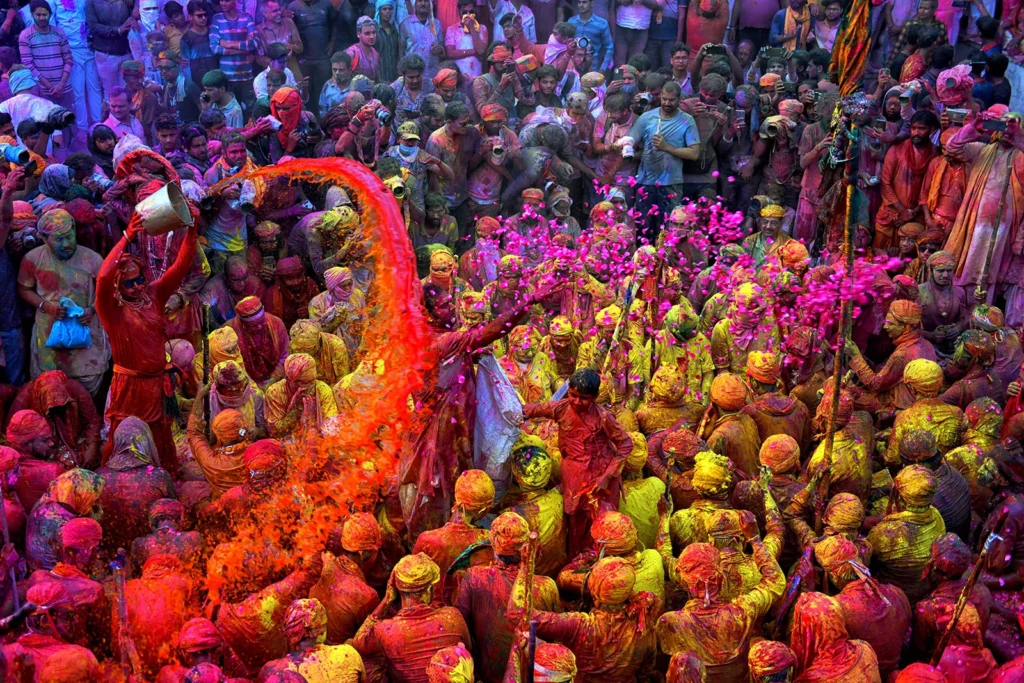
Holi, popularly known as the Festival of Colors, is one of the most vibrant and joyful festivals celebrated across India and in many parts of the world. It usually falls in March, on the full moon day (Purnima) of the Hindu month Phalguna.
Holi marks the arrival of spring, the end of winter, and the victory of good over evil.
🌞 Significance of Holi
Holi has deep religious, cultural, and social significance:
- Celebrates the triumph of good over evil, inspired by the story of Prahlad and Holika.
- Marks the end of winter and beginning of spring, a season of renewal and joy.
- Encourages people to forget differences and strengthen relationships.
- Symbolizes love, unity, and happiness in society.
📖 Mythological Story
The most famous legend behind Holi is of Prahlad and Holika:
- Prahlad was a devotee of Vishnu, but his father, Hiranyakashipu, opposed him.
- Holika, who had a boon to resist fire, tried to burn Prahlad.
- Due to divine protection, Prahlad survived, and Holika was burned.
👉 This story symbolizes that truth and devotion always win over evil.
🪔 Rituals and Celebrations
🔥 1. Holika Dahan (Bonfire Night)
- Celebrated on the eve of Holi.
- People light a bonfire to symbolize the burning of evil.
- Families gather, perform rituals, and pray for protection and prosperity.
🎨 2. Rangwali Holi (Color Festival)
- The main day of Holi involves playing with colors (gulal) and water.
- People throw colored powders, splash water, and celebrate with music and dance.
- Streets turn vibrant with joy and laughter.
🍬 Traditional Foods
Holi is also famous for delicious festive foods:
- Gujiya – sweet dumplings filled with khoya and dry fruits
- Thandai – a refreshing milk-based drink
- Malpua – sweet pancakes
- Dahi Bhalla – savory snack
👉 Food plays a big role in bringing families and communities together.
🌍 Cultural Importance
- Holi breaks social barriers—people of all ages, castes, and backgrounds celebrate together.
- It promotes forgiveness, friendship, and harmony.
- The phrase “Bura na mano, Holi hai!” reflects the playful spirit of the festival.
🌸 Regional Variations
Holi is celebrated differently across India:
- Lathmar Holi (Barsana & Nandgaon) – women playfully hit men with sticks
- Phoolon ki Holi (Vrindavan) – celebrated with flowers instead of colors
- Dol Jatra (West Bengal) – associated with devotion to Krishna
- Rang Panchami (Maharashtra & MP) – celebrated a few days later
🎉 Conclusion
Holi is more than just a festival of colors—it is a celebration of life, love, and positivity. It brings people together, spreads happiness, and reminds us that good always triumphs over evil.